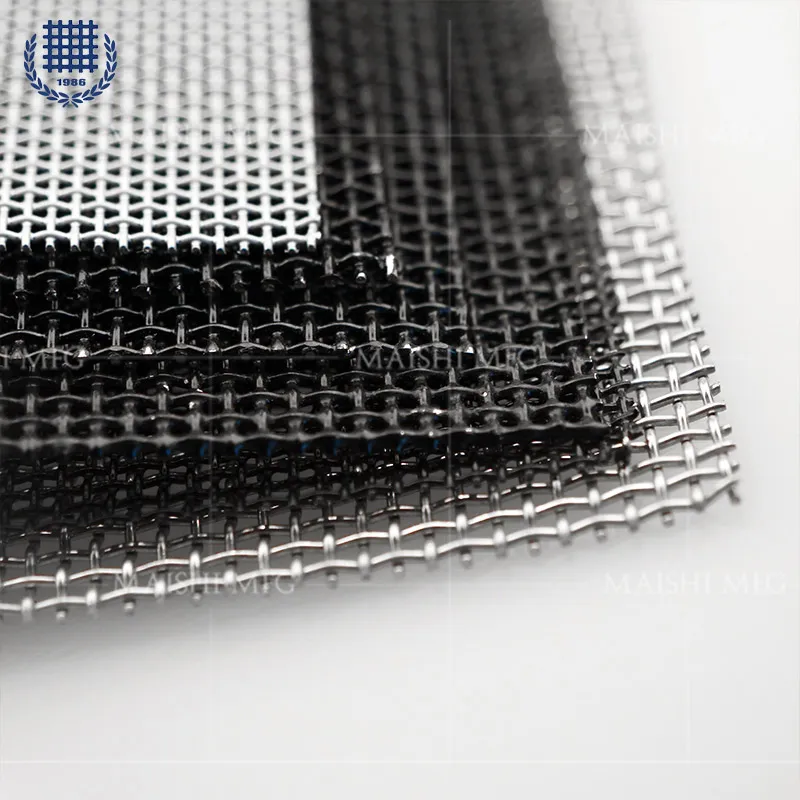
What’s the Difference Between 316 Marine Grade and 304 Grade Stainless Steel Mesh?
All of us know marine grade security mesh, but not everybody know how to distinguish 316 marine grade from 304 grade stainless steel mesh. It is known that marine grade security mesh has many advantages such as corrosion resistance, aging resistance, sunshine resistance and weather resistance, which is relatively population the market. In this paper, we would like to tell you several distinct difference of this two kind of marine grade stainless steel wire mesh.
MAISHI marine grade security mesh are made using 316 Marine Grade Stainless Steel mesh. Other screen manufacturers use Grade 304, which is a cheaper mesh offering some corrosion resistance, but simply doesn’t compare to Marine Grade 316, which provides superior resistance to a wider range of corrosive medias. If you’re not really sure what is the difference between 316 and 304, this article will show why Marine Grade 316 Stainless Steel is a clear winner when it comes to protecting your home.
Corrosion
So what exactly is corrosion and why is it a problem when it comes to security screens? Simply, corrosion is the process of deterioration through oxidation. This is a chemical action that creates oxides which flake away, exposing the surface underneath to further deterioration.
While corrosion can refer to any form of wearing down or erosion, it is most commonly associated with the process of rusting in metal. This occurs when iron molecules combine with oxygen in the presence of water to form a red flaky oxide.
Iron and steel are highly susceptible to this type of corrosion, and as security screens are made from steel and are constantly exposed to the elements, they too are vulnerable to attack from corrosion. Salt in particular is a highly corrosive substance and if you live near the coast, salt spray can be a real problem, even when your screens are made from stainless steel.
Stainless Steel
Stainless steel is valued for its anti-corrosive properties, and stainless steel mesh is used in the making of all modern security screens. Stainless steel is an alloy composed primarily of iron, with other ingredients added including nickel, titanium, aluminium, copper, nitrogen, phosphorous, and selenium. But the ingredient that gives stainless steel its anti-corrosive properties is chromium, which makes up at least 10.5% of its total composition.
Chromium reacts with oxygen just as iron does, and its secret is that it only causes a small amount of oxidisation, which then creates a very thin film on the surface of the stainless steel, often just a few molecules thick. This film adheres to the surface and creates an effective barrier against further oxidisation and corrosion.
Grade 304 and Marine Grade 316 stainless steel both contain similar amounts of chromium which give them their anti-corrosive properties, but Grade 304 is more susceptible to corrosion than Marine Grade 316 because it lacks one important extra ingredient.